
 By Mia Wilson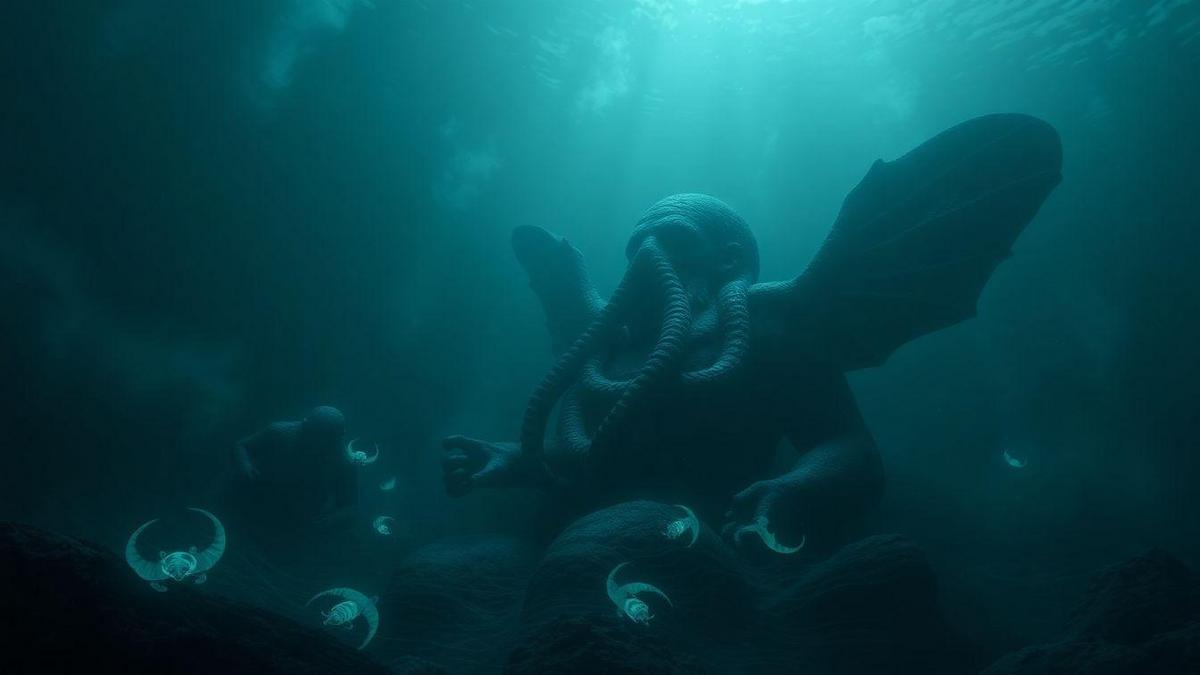
In this review of Cosmic Horror in The Call of Cthulhu, you’ll dive into a chilling world where ancient gods stir and dark secrets wait to be uncovered.
Get ready to explore the existential dread that creeps in the corners of your mind, making you question humanity’s place in a vast and terrifying universe.
This journey will peek into psychological horror, the art of creating fear, and the unknown that lies just beyond our understanding. So, hold on tight!
The Haunting World of Cosmic Horror: An Introduction to The Call of Cthulhu
The Call of Cthulhu is a seminal work that has defined the genre of cosmic horror, a subgenre that delves into the unfathomable and the unknown.
This tale, penned by H.P. Lovecraft, introduces readers to a world where ancient deities and cosmic entities exist beyond human comprehension.
The narrative unfolds through unsettling accounts, depicting the fragility of human sanity in the face of overwhelming horror.
Lovecraft’s ability to evoke an atmosphere of dread is unparalleled, as he takes us on a journey through the dark corners of the universe, where the boundaries of reality blur, and the mind quakes with terror.
Lovecraft’s cosmic horror is not merely about monsters lurking in the shadows; it is about the very essence of existence and the insignificance of humanity in the grand scheme of the cosmos.
The Call of Cthulhu serves as a chilling reminder that there are forces at play in the universe that are far beyond our understanding, waiting patiently for the right moment to awaken.
The haunting world he creates is both mesmerizing and terrifying, drawing readers into a narrative that lingers long after the last page is turned.
Lovecraftian Horror: Understanding the Master of Suspense
H.P. Lovecraft is often hailed as the master of suspense and horror, and for good reason. His unique style blends elements of science fiction, fantasy, and horror, creating unsettling narratives that challenge the reader’s perception of reality.
Lovecraft’s writing is characterized by intricate prose, rich descriptions, and a profound sense of foreboding.
He skillfully constructs a world where the mundane intersects with the extraordinary, leaving readers on the edge of their seats.
One hallmark of Lovecraftian horror is the use of unreliable narrators. The protagonists in his stories often grapple with their own sanity as they confront the incomprehensible.
This technique heightens the suspense and allows readers to immerse themselves in the psychological turmoil experienced by the characters.
Lovecraft’s ability to evoke fear through suggestion rather than explicit violence sets him apart from his contemporaries, making his works timeless and haunting.
In The Call of Cthulhu, Lovecraft’s mastery of suspense is evident as he weaves together multiple narratives, each revealing a piece of the horrifying puzzle.
The gradual unveiling of Cthulhu’s existence builds tension, drawing readers deeper into the abyss of cosmic horror.
Lovecraft’s influence can be seen in countless works of fiction, inspiring generations of writers to explore the dark recesses of the human psyche and the universe beyond.
Exploring the Theme of Existential Dread in The Call of Cthulhu
Existential dread permeates the pages of The Call of Cthulhu, as Lovecraft explores the fragility of human existence in a vast and indifferent universe.
The story confronts readers with the uncomfortable truth that humanity is but a fleeting moment in the grand tapestry of time.
The titular creature, Cthulhu, embodies this existential terror, representing the unknown and the unknowable.
As characters encounter remnants of ancient civilizations and the whispers of forgotten gods, they face the realization that their lives are insignificant in the face of cosmic forces.
Lovecraft’s portrayal of existential dread is visceral. The characters grapple with their own mortality and the futility of their existence as they confront Cthulhu’s terrifying presence.
The juxtaposition of the mundane with the cosmic creates unease, forcing readers to question their own place in the universe.
As the narrative unfolds, it becomes clear that the true horror lies not in physical manifestations of terror but in the realization that humanity is powerless against the vastness of existence.
The theme of existential dread is amplified by Lovecraft’s use of language. His descriptions evoke despair, painting a bleak picture of a world where hope is a distant memory.
The characters’ descent into madness serves as a poignant reminder of the psychological toll that such realizations can take.
Lovecraft’s exploration of existential dread resonates with readers, inviting them to confront their own fears and uncertainties about life, death, and the unknown.
Forbidden Knowledge: The Dark Secrets Unveiled
In The Call of Cthulhu, the pursuit of forbidden knowledge serves as a catalyst for horror. The protagonist’s investigation into the cult of Cthulhu leads to the discovery of ancient texts and esoteric symbols that unveil dark secrets about the cosmos.
This quest for knowledge, while seemingly noble, ultimately leads to devastating consequences.
Lovecraft masterfully illustrates the dangers of delving into the unknown, highlighting the thin line between enlightenment and madness.
The concept of forbidden knowledge is a recurring theme in Lovecraft’s work, representing humanity’s insatiable curiosity and potential for self-destruction.
Characters seeking to uncover the truth about Cthulhu often meet tragic fates, as the knowledge they acquire shatters their sanity.
Lovecraft warns that some truths are better left undiscovered, as the quest for understanding can lead to horrific revelations that challenge the very fabric of reality.
The allure of forbidden knowledge draws readers into the narrative as they, too, become curious about the dark secrets that lie beneath the surface.
Lovecraft’s depiction of ancient tomes and cryptic symbols evokes mystery, inviting readers to explore the depths of cosmic horror.
However, as the characters learn, the pursuit of such knowledge comes at a steep price, leaving them haunted and irrevocably changed.
Ancient Gods and Their Terrifying Presence
The presence of ancient gods in The Call of Cthulhu adds an unsettling layer to the narrative, as Lovecraft introduces readers to beings that exist beyond human comprehension.
Cthulhu, as the embodiment of cosmic horror, serves as a reminder of humanity’s insignificance in the face of these ancient deities.
Lovecraft’s portrayal of Cthulhu is both awe-inspiring and terrifying, as the creature’s very existence challenges the laws of nature and reality.
Lovecraft’s ancient gods are indifferent to humanity’s struggles and desires. Their presence evokes dread, as characters grapple with the realization that these beings exist in a realm far removed from human understanding.
The cult that worships Cthulhu is a testament to the terrifying allure of these ancient gods, as individuals are drawn to the promise of power and knowledge, only to be consumed by the very forces they seek to understand.
The theme of ancient gods in Lovecraft’s work reflects humanity’s fears and uncertainties.
The unknown becomes a source of terror, as characters confront the realization that their lives are but fleeting moments in the grand scheme of the cosmos.
Lovecraft’s ability to evoke reverence and fear towards these ancient beings creates a haunting atmosphere, leaving readers with a lingering sense of unease.
The Unknown: Fear of What Lurks Beyond
The fear of the unknown is a central theme in The Call of Cthulhu, as Lovecraft masterfully constructs a world where shadows conceal unspeakable horrors.
The characters’ encounters with Cthulhu and the cult that worships him evoke dread, as the unknown looms ever closer.
Lovecraft’s writing taps into primal fears, drawing on humanity’s instinctual aversion to what lies beyond the veil of comprehension.
Lovecraft’s use of ambiguity and suggestion heightens the suspense, as readers grapple with their own fears of the unknown.
Descriptions of Cthulhu’s grotesque form and the unsettling rituals of the cult create an atmosphere of impending doom, as characters confront the reality that they are not alone in the universe.
The unknown becomes a character in its own right, lurking in the shadows and waiting to pounce.
The fear of what lurks beyond extends to the psychological realm as well. The characters’ descent into madness serves as a poignant reminder of the fragility of the human mind when faced with the incomprehensible.
Lovecraft’s exploration of the unknown resonates with readers, inviting them to confront their own fears and uncertainties about the mysteries of existence.
Psychological Horror: The Mind’s Descent into Madness
Psychological horror is a prominent aspect of The Call of Cthulhu, as Lovecraft delves into the fragility of the human mind when confronted with cosmic horrors.
The characters’ experiences often lead to a gradual unraveling of their sanity as they grapple with the implications of their discoveries.
Lovecraft’s portrayal of madness is both haunting and compelling, inviting readers to explore the depths of the human psyche.
The descent into madness is often triggered by the characters’ encounters with Cthulhu and the cult that worships him.
The knowledge they acquire becomes a double-edged sword, offering insights into the cosmos while simultaneously shattering their grasp on reality.
Lovecraft’s exploration of psychological horror serves as a powerful reminder of the thin line between sanity and insanity, as characters find themselves teetering on the brink of despair.
Lovecraft’s ability to evoke psychological horror lies in his use of language and imagery.
His descriptions of the characters’ mental states are vivid and unsettling, drawing readers into their turmoil.
The gradual unraveling of the mind serves as a chilling reminder of the fragility of human existence, as the characters confront the terrifying truths that lie beyond comprehension.
Crafting an Atmosphere of Terror: Writing Techniques in The Call of Cthulhu
Lovecraft’s mastery of atmosphere is a key element in The Call of Cthulhu, as he employs various writing techniques to evoke a sense of terror and unease.
His use of descriptive language immerses readers in a world of darkness and dread, where every shadow conceals a potential horror.
Lovecraft’s ability to create vivid imagery allows readers to visualize the grotesque and the uncanny, heightening the overall sense of suspense.
One of Lovecraft’s signature techniques is the use of first-person narration, which invites readers to experience the story through the eyes of the protagonist.
This perspective creates an intimate connection between the reader and the character, amplifying the emotional impact of their experiences.
As the protagonist grapples with the horrors of Cthulhu, readers are drawn into their psychological turmoil, heightening the sense of dread.
Additionally, Lovecraft employs pacing to build tension throughout the narrative. The gradual unveiling of Cthulhu’s existence allows readers to become increasingly invested in the story, as the suspense mounts with each revelation.
Lovecraft’s use of foreshadowing and ominous imagery creates a sense of inevitability, as readers become acutely aware that something terrible is lurking just beyond the horizon.
Cosmic Insignificance: Humanity’s Place in the Universe
The theme of cosmic insignificance permeates The Call of Cthulhu, as Lovecraft confronts readers with the unsettling truth that humanity is but a fleeting moment in the vast expanse of the universe.
The existence of ancient gods and cosmic entities serves as a stark reminder of the fragility of human life, as characters grapple with the realization that their struggles and aspirations are ultimately inconsequential in the grand scheme of things.
Lovecraft’s exploration of cosmic insignificance invites readers to reflect on their own place in the universe.
The characters’ encounters with Cthulhu challenge their understanding of reality, forcing them to confront the uncomfortable truth that they are not the center of existence.
This theme resonates deeply, as it taps into humanity’s innate desire for meaning and purpose in a seemingly indifferent cosmos.
The sense of cosmic insignificance is further amplified by Lovecraft’s use of language. His descriptions evoke a sense of despair and hopelessness, painting a bleak picture of a universe where humanity is powerless against the forces that govern existence.
Lovecraft’s ability to evoke this sense of insignificance creates a haunting atmosphere, leaving readers with a lingering sense of unease.
Review: Cosmic Horror in The Call of Cthulhu – A Journey into the Abyss
The Call of Cthulhu is a masterclass in cosmic horror, showcasing Lovecraft’s unparalleled ability to evoke suspense and dread.
Through his intricate prose and vivid imagery, Lovecraft transports readers into a world where ancient gods and cosmic entities lurk just beyond the veil of reality.
The themes of existential dread, forbidden knowledge, and cosmic insignificance resonate deeply, inviting readers to confront their own fears and uncertainties.
Lovecraft’s exploration of psychological horror adds an additional layer of complexity to the narrative, as characters grapple with their own sanity in the face of overwhelming terror.
The descent into madness serves as a chilling reminder of the fragility of the human mind, heightening the overall sense of dread.
Lovecraft’s writing techniques, including first-person narration and pacing, create a palpable atmosphere of terror, drawing readers into the abyss of cosmic horror.
In conclusion, The Call of Cthulhu is a haunting journey into the unknown, a testament to Lovecraft’s mastery of suspense and horror.
It is a work that lingers in the mind long after the final page is turned, inviting readers to explore the dark recesses of existence and confront the terrors that lie beyond comprehension.
For fans of suspense and horror, Lovecraft’s masterpiece is an essential read, a chilling reminder of the cosmic horrors that await in the shadows.